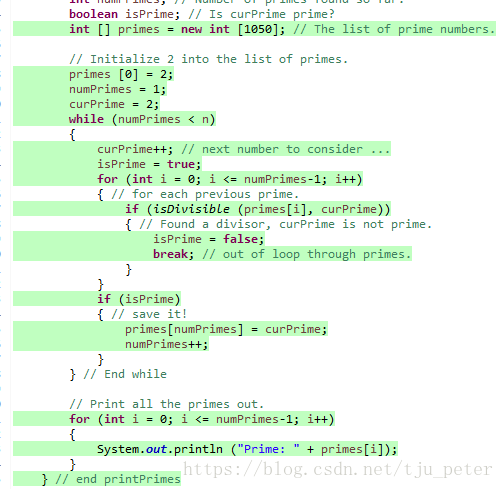
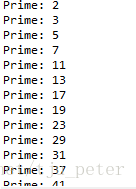
.5kkdqdezd7g0.png)
软件测试第三次作业
Use the followingmethod printPrimes() for questions a–dbelow.
private static void printPrimes (int n)
{
    int curPrime; // Value currently considered for primeness
    int numPrimes; // Number of primes found so far.
    boolean isPrime; // Is curPrime prime?
    int [] primes = new int [MAXPRIMES]; // The list of prime numbers.

// Initialize 2 into the list of primes.
primes [0] = 2;
numPrimes = 1;
curPrime = 2;
while (numPrimes < n)
{
    curPrime++; // next number to consider ...
    isPrime = true;
    for (int i = 0; i <= numPrimes-1; i++)
    { // for each previous prime.
        if (isDivisible (primes[i], curPrime))
        { // Found a divisor, curPrime is not prime.
            isPrime = false;
            break; // out of loop through primes.
        }
    }
    if (isPrime)
    { // save it!
        primes[numPrimes] = curPrime;
        numPrimes++;
    }
} // End while

// Print all the primes out.
for (int i = 0; i <= numPrimes-1; i++)
{
    System.out.println ("Prime: " + primes[i]);
}

} // end printPrimes
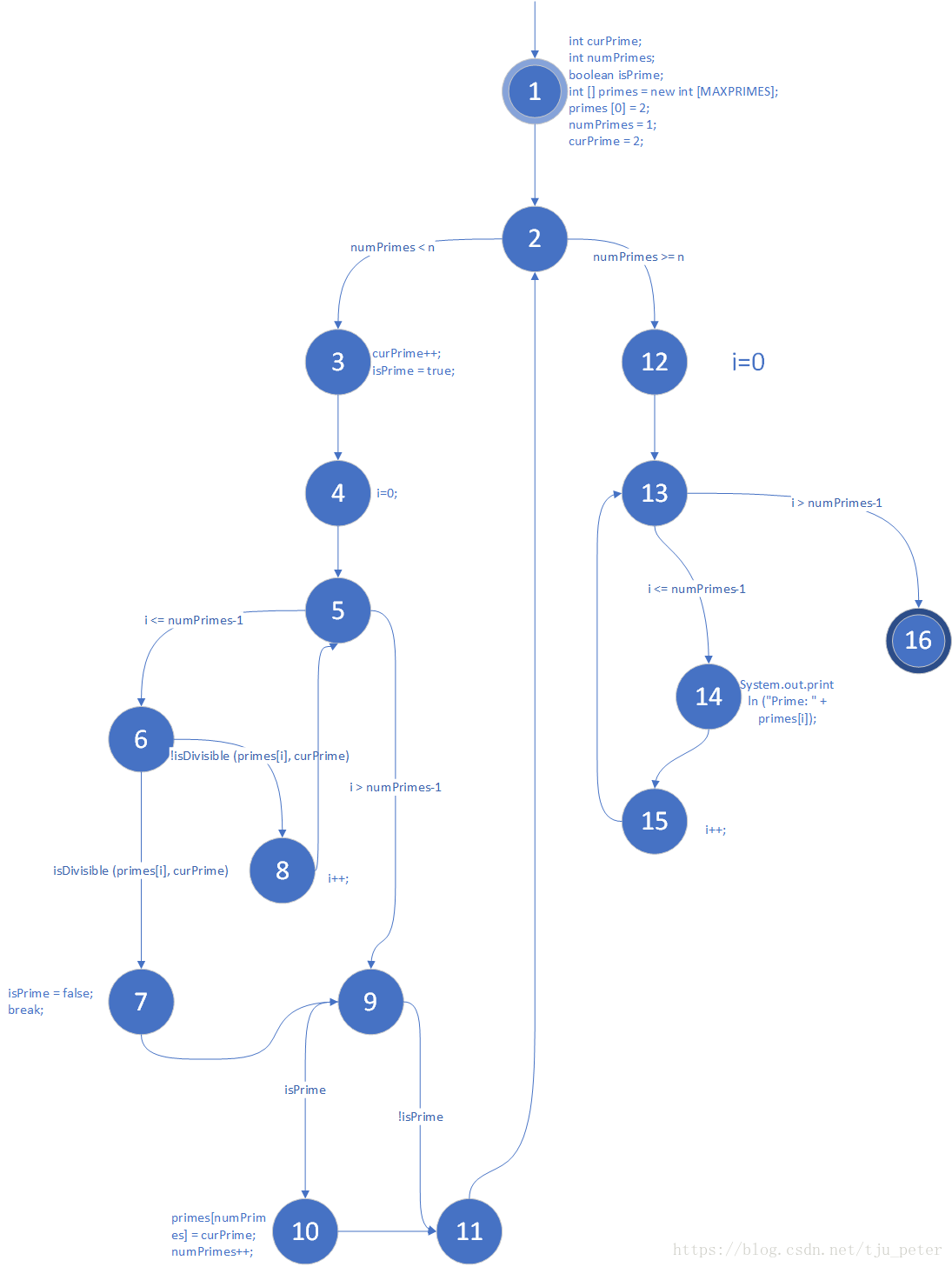
(a) Draw the control flow graph for the printPrimes() method.
(b) Consider test cases t1 = (n = 3) and t2 = (n = 5). Although these tour the
same prime paths in printPrimes(), they do not necessarily find the same
faults. Design a simple fault that t2 would be more likely to discover than
t1 would.
设MAXPRIMES=4,t2数组越界,t1不会有错误
(c) For printPrimes(), find a test case such that the corresponding test
path visits the edge that connects the beginning of the while statement
to the forstatement without going through thebody of the while
loop.
n=1时直接跳出循环
(d) Enumerate the test requirements for node coverage, edge coverage, and
prime path coveragefor the graph for printPrimes().
node coverage:
{1,2,3,4,5,6,7,8,9,10,11,12,13,14,15,16}
Edge coverage:
{(1,2),(2,3),(2,12),(3,4),(4,5),(5,6),(5,9),(6,8),(8,5),(6,7),(7,9),(9,10),(9,11),(10,11),(11,2),(12,13),(13,14),(13,16),(14,15),(15,13)}
Prime path coverage:
{[1,2,3,4,5,6,7,8,9,10,11],[1,2,3,4,5,6,7,9,11],[1,2,3,4,5,6,8],[1,2,3,4,5,9,10,11],[1,2,3,4,5,9,11],[2,3,4,5,6,7,9,10,11,2],[2,3,4,5,6,7,9,11,2],[2,3,4,5,6,8],[2,3,4,5,9,10,11,2],[2,3,4,5,9,11,2],[5,6,8,5],[6,8,5,6],[8,5,6,8],[9,10,11,9],[10,11,9,10],[11,9,10,11],[1,2,12,13,16],[1,2,12,13,14,15],[13,14,15,13],[14,15,13,14],[15,13,14,15],[3,4,5,9,11,2,3],[4,5,9,11,2,3,4],[5,9,11,2,3,4,5],[9,11,2,3,4,5,9],[11,2,3,4,5,9,11],[3,4,5,6,7,9,10,11,2,3],[4,5,6,7,9,10,11,2,3,4],[5,6,7,9,10,11,2,3,4,5],[6,7,9,10,11,2,3,4,5,6],[7,9,10,11,2,3,4,5,6,7],[9,10,11,2,3,4,5,6,7,9],[10,11,2,3,4,5,6,7,9,10],[11,2,3,4,5,6,7,9,10,11],[3,4,5,6,7,9,11,2,3],[4,5,6,7,9,11,2,3,4],[5,6,7,9,11,2,3,4,5],[6,7,9,11,2,3,4,5,6],[7,9,11,2,3,4,5,6,7],[9,11,2,3,4,5,6,7,9],[11,2,3,4,5,6,7,8,9,11],[3,4,5,9,10,11,2,3],[4,5,9,10,11,2,3,4],[5,9,10,11,2,3,4,5],[9,10,11,2,3,4,5,9],[10,11,2,3,4,5,9,10],[11,2,3,4,5,9,10,11]}
package primes;import org.junit.Assert.*;
import org.junit.Before;
import org.junit.Test;public class testprimes {
private primes pri;@Before public void setup(){ pri=new primes(); } @Test public void tests(){ pri.printPrimes(15); }}
private static boolean isDivisible(int a,int b){
        if(b%a==0)
            return true;
        return false;
    }